
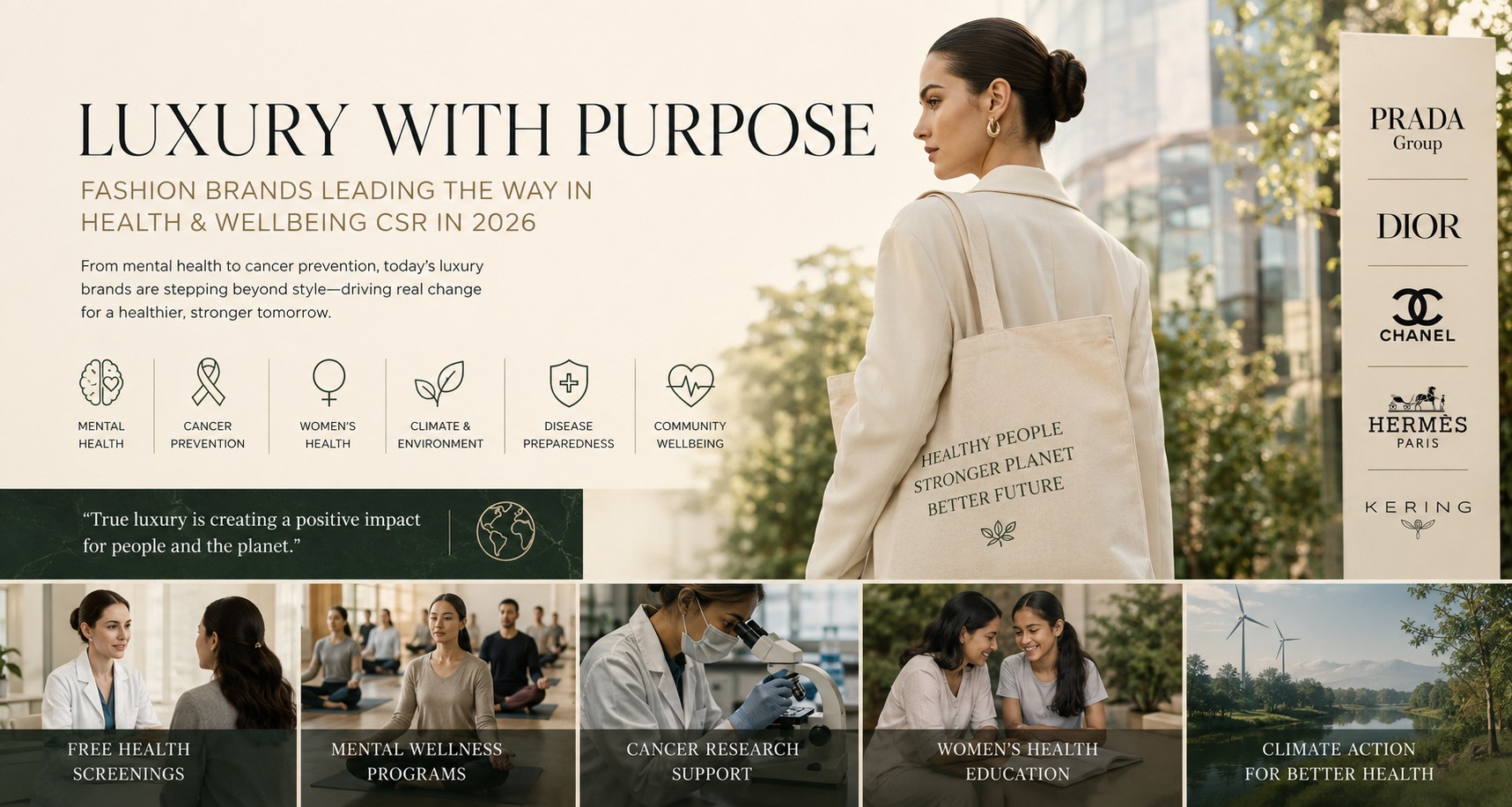

Luxury Fashion Meets Global Health: How Leading Brands Are Supporting Disease Prevention Through CSR in 2026
In 2026, Corporate Social Responsibility (CSR) has evolved beyond environmental sustainability and charitable donations. Leading luxury fashion houses are increasingly recognizing their responsibility to contribute to global health and community wellbeing. As the world continues to face rising health challenges, brands such as Prada, Dior, Chanel, Hermès, and Gucci are integrating health-focused initiatives into their sustainability and social impact strategies.
The World’s Most Pressing Health Challenges in 2026
Global health organizations continue to identify several major diseases and health concerns that require urgent attention. These include:
-
Mental Health Disorders: Anxiety, depression, burnout, and stress-related illnesses continue to rise, particularly among young people and working professionals.
-
Cancer: Breast cancer, skin cancer, cervical cancer, and prostate cancer remain among the leading causes of death worldwide. Early detection and preventive screening are more important than ever.
-
Women’s Health: Greater awareness is being given to maternal health, PCOS, endometriosis, menstrual health, and reproductive healthcare.
-
Diabetes and Obesity: Lifestyle-related diseases continue to increase globally due to poor nutrition, sedentary lifestyles, and urbanization.
-
Climate-Related Health Risks: Heat-related illnesses, respiratory diseases caused by air pollution, and vector-borne diseases linked to climate change are becoming more common.
-
Infectious Disease Preparedness: Following the lessons of the COVID-19 pandemic, many organizations continue investing in disease prevention, vaccination awareness, and emergency health preparedness.
These challenges have encouraged businesses to expand CSR efforts beyond environmental sustainability and into public health and community wellbeing.
How Luxury Fashion Brands Are Making a Difference
Prada Group: Prioritizing Preventive Healthcare
Prada Group has emerged as one of the leaders in employee health initiatives. In 2026, the company partnered with Italy’s League Against Cancer (LILT) to provide preventive healthcare services, including dermatological screenings for skin cancer and health checks focused on both men’s and women’s wellbeing. By promoting early detection and regular health assessments, Prada demonstrates how preventive healthcare can become part of corporate responsibility.
Dior: Empowering Women Through Health and Education
Dior continues to combine women’s empowerment with health-focused CSR initiatives. The brand actively supports breast cancer awareness campaigns, contributes to cancer research, and invests in educational partnerships that empower women worldwide. Through collaborations with organizations such as UNESCO, Dior emphasizes that education, health, and opportunity are closely connected.
Chanel: Investing in Employee Wellbeing
Chanel has strengthened its commitment to employee wellbeing by expanding workplace health programs and initiatives that promote dignity, inclusion, and long-term wellness. While much of Chanel’s CSR strategy focuses on people and sustainability, the company’s emphasis on healthy working environments reflects the growing importance of mental and physical wellbeing within global organizations.
Hermès: Sustainability with a Human Focus
Hermès is widely recognized for its commitment to sustainable craftsmanship and responsible business practices. Although the company has fewer publicly highlighted disease-prevention campaigns, it continues to prioritize employee welfare, ethical production, and environmental sustainability—all of which contribute to healthier communities and workplaces.
Gucci and Kering: Climate Action for Better Health
As part of the Kering Group, Gucci continues to invest heavily in environmental sustainability. Climate change has become a significant public health issue, influencing respiratory illnesses, heat-related diseases, and food security. By reducing environmental impact and supporting biodiversity, Kering contributes to healthier living conditions for future generations.
The Future of CSR: Health as a Shared Responsibility
Modern consumers increasingly expect brands to make meaningful contributions to society beyond producing luxury products. Today’s CSR strategies are becoming more holistic, addressing both environmental sustainability and human wellbeing.
Health-related CSR initiatives may include:
-
Free preventive health screenings
-
Mental health awareness campaigns
-
Cancer prevention and early detection programs
-
Women’s health education
-
Community wellness events
-
Nutrition and fitness awareness
-
Air quality and climate resilience projects
-
Infectious disease preparedness and public health education
Such initiatives not only improve community health but also strengthen trust between brands and the people they serve.
Conclusion
Luxury fashion is no longer defined solely by craftsmanship, exclusivity, or design. In 2026, it is increasingly associated with purpose, responsibility, and positive social impact. Brands like Prada, Dior, Chanel, Hermès, and Gucci demonstrate that corporate success can coexist with meaningful contributions to public health and community wellbeing.
As global health challenges continue to evolve, the role of corporate social responsibility will become even more significant. By investing in disease prevention, mental health, women’s wellbeing, environmental protection, and preventive healthcare, luxury fashion brands have the opportunity to inspire positive change that extends far beyond the runway.